
Why “cheap” doesn’t mean “easy” — and why cinematic storytelling still matters.
Everyone wants the magic shortcut. Type a few words, get a stunning commercial. But when it comes to AI video production, the biggest misconception is cost — not just in dollars, but in time, iteration, and vision.
The truth? AI might reduce camera rentals and travel days, but it introduces a completely new economy: creative precision.
1. The Myth of “Instant Cinema”
The tools look effortless — you feed a prompt, and out comes something that looks like a $200,000 ad. But that’s only half the picture.
Behind every few seconds of polished AI footage is:
- Dozens of prompt tests and regenerations
- Hours of refining camera motion, lighting realism, and character consistency
- Paid upscaling, editing, and post-correction workflows
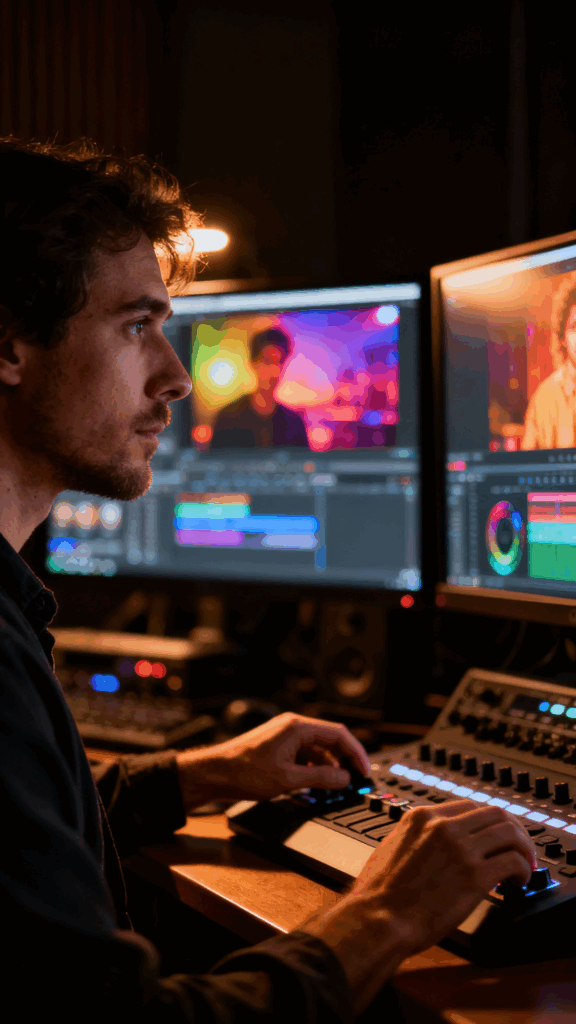
You might not be paying a full production crew, but you’re still paying for expertise — prompt design, art direction, and post-production craftsmanship.
In other words, AI doesn’t eliminate the artist. It amplifies the need for one who understands cinema.
2. The Real Value Shift
In traditional shoots, money flows into logistics — cameras, lenses, studios, models, lighting, travel.
In AI production, those costs shift into time spent prompting, generating, and iterating — creative trial and adjustment instead of physical setup.
A small scene that once required a day of shooting might now take:
- 8-12+ Prompt iterations for images (Not including internal and client revisions)
- 8-12+ Prompt iterations for videos (Not including internal and client revisions)
- $40–$100+ in generation and render credits (Depending on revisions)
- Multiple upscale passes for realism
- A day or two of editing, color work, sound design, VFX cleanup, and render optimization
The result is faster — but the savings come from efficiency, not elimination.
The real shift is from physical overhead to speed and iteration.
Example Video Prompt for 1 scene:
{
  "scene_id": "001",
  "title": "Clif Bar – Summit Bite",
  "environment": {
    "setting": "Golden-hour mountain ridge at sunrise; cool mist layers drift through the valley below.",
    "terrain": "Weathered granite rock with alpine grass patches and soft breeze movement.",
    "atmosphere": "Cinematic natural light; volumetric rays visible through thin haze; mild wind fluttering jacket fabric."
  },
  "subject": {
    "description": "Athletic woman in her 30s wearing light hiking gear, hair tied back, standing on a ridge edge.",
    "action": "She unwraps an energy bar, takes a calm bite, and gazes at the horizon with content determination.",
    "emotion": "Serene focus, inner strength, quiet confidence."
  },
  "style": "Photorealistic cinematic realism; handheld naturalism with shallow depth of field; film-grade texture and motion blur.",
  "composition": {
    "framing": "Medium close-up, 3/4 profile facing sunrise.",
    "depth": "Foreground wrapper edges crisp; background softly diffused mountains.",
    "rule_of_thirds": true,
    "motion_balance": "Subtle parallax between subject and horizon."
  },
  "lighting": {
    "key": "Low-angle golden sunlight at 4800K from camera-right, 1.5 stops over ambient.",
    "fill": "Sky bounce at 5200K, 40% of key intensity.",
    "rim": "Warm sun halo outlining subject hair and shoulders.",
    "ambient": "Neutral fill light on environment with natural sky reflection.",
    "consistency": "Maintain single light direction across frames."
  },
  "color": {
    "palette": "Warm sunrise amber on subject, cool blue haze in background; balanced mids; highlight rolloff.",
    "white_balance": "5000K neutral daylight tone."
  },
  "mood": "Empowerment and calm focus; morning energy and clarity of purpose.",
  "camera": {
    "lens": "35mm",
    "sensor": "full_frame",
    "aperture": "f2.8",
    "fps": 24,
    "shutter": "180 degree",
    "movement": {
      "type": "slow dolly-in from medium to medium-close with slight right arc",
      "stabilization": "gentle handheld micro-jitter for realism",
      "focus_behavior": "rack focus from face to product mid-scene",
      "parallax": "mild, horizon drift consistent with camera motion"
    }
  },
  "look": {
    "grade": "Neutral cinematic base; lifted shadows; golden midtones; no hard contrast.",
    "grain": "35mm fine film grain at 25% intensity; consistent per frame.",
    "bloom": "Soft highlight bloom on rim edges; no overexposure.",
    "tone_curve": "Gentle S-curve; smooth transitions in midtones."
  },
  "brand": {
    "logo_usage": "Use @Image1 (Clif logo) as static overlay or integrated pack detail; no distortion or flicker.",
    "product_texture": "Use @Image2 (wrapper texture) for realistic reflection and text fidelity."
  },
  "physics": {
    "wind": "2 m/s from right; visible in jacket and loose strands of hair.",
    "gravity": "consistent; wrapper crinkle moves naturally downward."
  },
  "negatives": [
    "no flicker or morphing",
    "no logo warping",
    "no extreme DOF breathing",
    "no HDR clipping",
    "no fake CGI lighting"
  ],
  "intent": "Single hero shot representing natural energy and renewal — a commercial-ready frame of cinematic authenticity."
}
3. Where the Savings Actually Happen
The real advantage of AI isn’t replacing filmmakers — it’s in speed and flexibility.
AI lets studios test entire campaigns before production even begins.
You can visualize multiple storyboards, product placements, or wardrobe looks in hours instead of weeks.
That’s where the savings are — in pre-production decisions, not the final execution.
Once the vision locks, AI video tools can deliver cinematic polish at a fraction of traditional timelines — but only when guided by experienced eyes.
4. Why Authentic Brands Still Need Direction
AI can replicate the look of cinema — but not the emotion of it.
Every lighting cue, lens choice, and motion nuance still comes from human direction.
Brands that skip this layer end up with sterile, “AI-made” visuals that look generic — perfectly rendered but emotionally hollow.
The cost of bad direction is subtle but expensive: lost trust, low engagement, forgettable storytelling.
The solution isn’t choosing between AI and human creativity — it’s combining both.
5. The Future: Hybrid Production Studios
Studios like krust represent the next era — blending traditional film expertise with AI efficiency.
We use generative tools for what they’re best at: iteration, ideation, and expansion.
Then we layer in lighting, cinematography, and post-production that still feels handcrafted.
The result: videos that look like Hollywood, move like cinema, and cost a fraction of full-scale shoots — without sacrificing storytelling.
Final Take
AI is not a discount shortcut. It’s a new language of creation — one that rewards craft, taste, and patience just like real filmmaking.
So yes, AI saves time and budget.
But the studios that thrive will be the ones that know where to spend — and where not to.